
Imagine a single molecule that could simultaneously target multiple metabolic pathways, dramatically reducing appetite while enhancing your body’s natural ability to regulate blood sugar and burn fat. This isn’t science fiction—it’s the remarkable reality of tirzepatide, a groundbreaking peptide that’s revolutionizing our understanding of how tirzepatide works for weight loss. As researchers and laboratories worldwide investigate this dual-action compound, the scientific community is uncovering mechanisms that challenge conventional approaches to metabolic health and weight management.
Tirzepatide represents a paradigm shift in peptide research, offering insights into how targeted receptor activation can produce profound metabolic changes. For research professionals seeking to understand the intricate biological processes behind this compound, grasping the fundamental mechanisms is essential.
Key Takeaways
- Dual receptor activation: Tirzepatide uniquely targets both GIP and GLP-1 receptors, creating synergistic metabolic effects that surpass single-pathway interventions
- Multi-system impact: The peptide influences appetite regulation, insulin secretion, gastric emptying, and energy expenditure through coordinated biological mechanisms
- Research-grade purity matters: High-quality tirzepatide samples are essential for reproducible laboratory results and accurate mechanistic studies
- Dose-dependent responses: Research demonstrates clear correlations between tirzepatide concentrations and magnitude of metabolic effects
- Clinical significance: Understanding tirzepatide’s mechanisms provides valuable insights for broader metabolic research applications
Understanding Tirzepatide: The Dual-Action Peptide
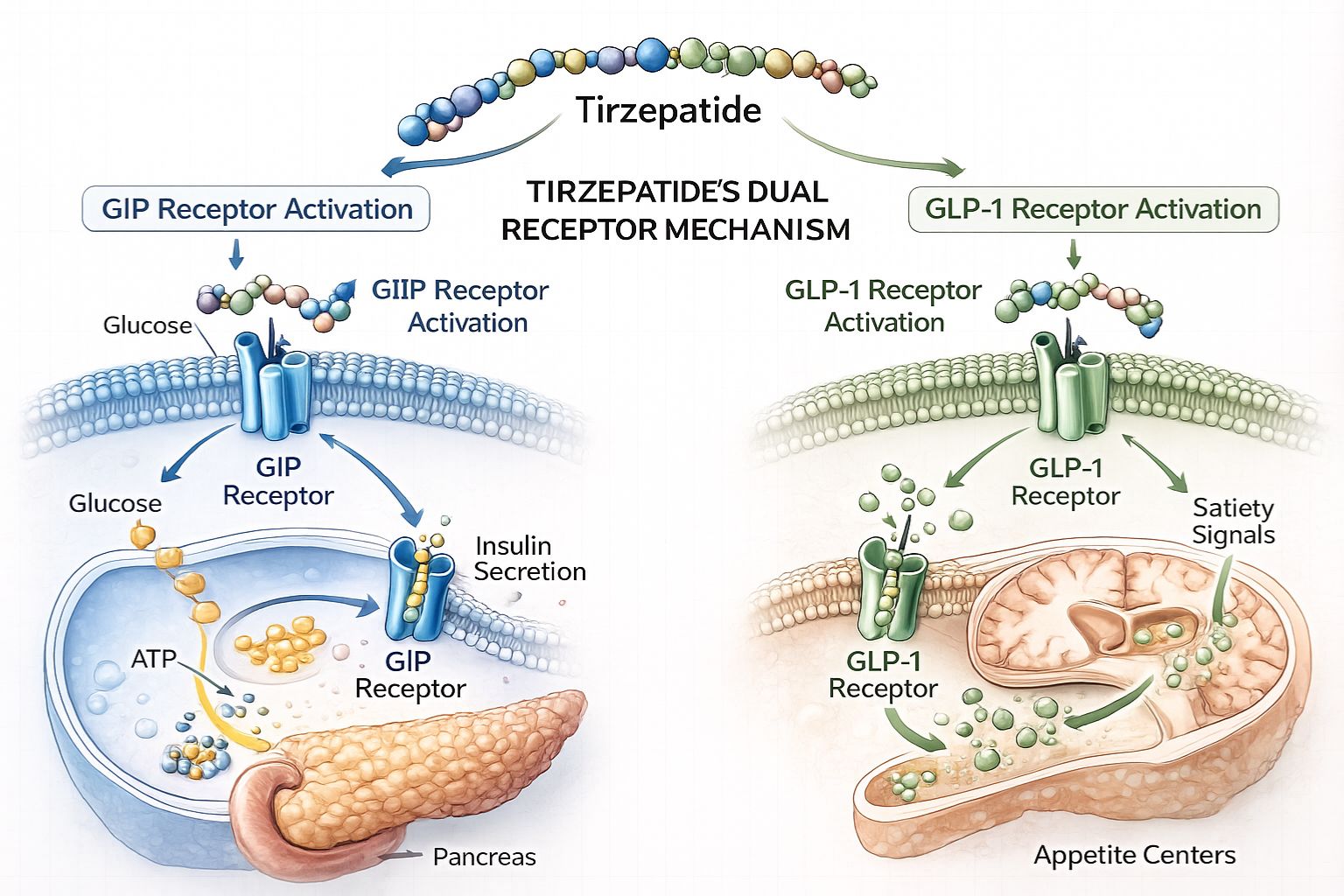
Tirzepatide is a synthetic peptide that functions as a dual glucose-dependent insulinotropic polypeptide (GIP) and glucagon-like peptide-1 (GLP-1) receptor agonist. This dual mechanism distinguishes it from earlier single-receptor compounds and explains much of its potency in research applications [1].
The Molecular Structure
The tirzepatide molecule consists of 39 amino acids with specific modifications that enhance its stability and receptor binding characteristics. These structural features include:
- C20 fatty diacid moiety: Enables albumin binding and extends half-life
- Modified GIP backbone: Maintains GIP receptor activation while incorporating GLP-1 activity
- Strategic amino acid substitutions: Enhance receptor selectivity and reduce enzymatic degradation
- Optimized molecular weight: Approximately 4,813 Daltons for ideal pharmacological properties
For laboratories conducting peptide research, high-purity tirzepatide samples are critical for consistent experimental outcomes and mechanistic investigations.
Why Dual Receptor Activation Matters
The innovation behind tirzepatide lies in its ability to simultaneously engage two distinct incretin pathways. While GLP-1 receptor agonists have been studied extensively, the addition of GIP receptor activation creates synergistic effects that amplify metabolic responses [2].
GIP Receptor Functions:
- Enhances glucose-dependent insulin secretion
- Influences lipid metabolism
- Affects adipocyte function
- Modulates bone metabolism
GLP-1 Receptor Functions:
- Stimulates insulin release in response to glucose
- Suppresses glucagon secretion
- Slows gastric emptying
- Reduces appetite through central nervous system pathways
How Tirzepatide Works for Weight Loss: The Core Mechanisms
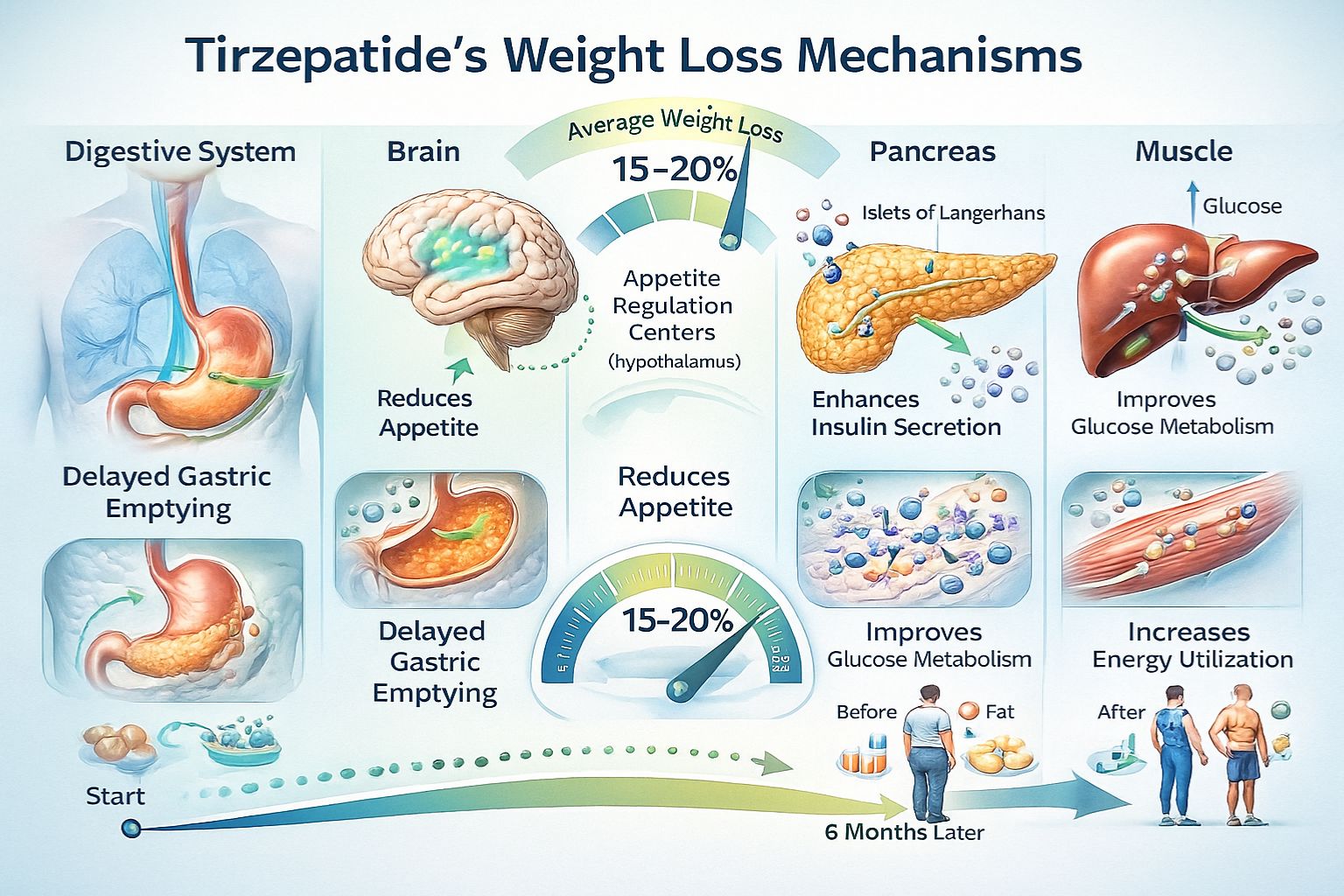
Understanding how tirzepatide works for weight loss requires examining its effects across multiple physiological systems. The compound doesn’t simply suppress appetite—it orchestrates a complex series of metabolic changes that collectively promote energy balance shifts.
🧠 Central Appetite Regulation
Tirzepatide’s impact on appetite represents one of its most significant mechanisms. The peptide crosses the blood-brain barrier and interacts with specific hypothalamic regions responsible for hunger and satiety signaling [3].
Key Appetite Mechanisms:
| Mechanism | Effect | Research Significance |
|---|---|---|
| POMC neuron activation | Increased satiety signals | Reduces food-seeking behavior |
| NPY/AgRP neuron suppression | Decreased hunger signals | Lowers baseline appetite |
| Reward pathway modulation | Reduced hedonic eating | Affects food preference patterns |
| Leptin sensitivity enhancement | Improved satiety hormone response | Addresses leptin resistance |
Research laboratories studying appetite-regulating peptides can gain valuable insights from tirzepatide’s multi-pathway approach to central nervous system modulation.
🔄 Gastric Emptying and Nutrient Processing
Tirzepatide significantly delays gastric emptying—the rate at which food leaves the stomach and enters the small intestine. This mechanism contributes to weight loss through several pathways:
- Extended satiety duration: Slower gastric emptying maintains fullness sensations longer after meals
- Reduced postprandial glucose spikes: Gradual nutrient absorption prevents rapid blood sugar elevations
- Modified nutrient sensing: Altered intestinal nutrient exposure affects incretin hormone release
- Decreased meal frequency: Prolonged gastric retention naturally reduces eating occasions
The delayed gastric emptying effect is dose-dependent, with higher tirzepatide concentrations producing more pronounced delays in research models [4].
📊 Insulin Secretion and Glucose Metabolism
The glucose-dependent nature of tirzepatide’s insulin secretion represents a critical safety feature. Unlike compounds that stimulate insulin release regardless of blood glucose levels, tirzepatide’s effects are proportional to circulating glucose concentrations.
Insulin Secretion Cascade:
- Glucose elevation detected by pancreatic beta cells
- Tirzepatide binding to GIP and GLP-1 receptors on beta cell surface
- Intracellular signaling cascade activation (cAMP pathway)
- Enhanced insulin granule mobilization and exocytosis
- Insulin release proportional to glucose stimulus
This glucose-dependent mechanism minimizes hypoglycemia risk in research applications and provides insights into safer metabolic interventions.
💪 Energy Expenditure and Thermogenesis
Beyond reducing energy intake, research suggests tirzepatide may influence energy expenditure through multiple mechanisms:
- Brown adipose tissue activation: Enhanced thermogenic activity in brown fat deposits
- Mitochondrial function: Improved cellular energy metabolism efficiency
- Physical activity effects: Potential influences on spontaneous movement patterns
- Metabolic rate modulation: Subtle increases in resting energy expenditure
While the magnitude of these effects varies across research models, they contribute to the overall energy balance equation that determines weight trajectory [5].
The Biological Pathways: How Tirzepatide Works for Weight Loss at the Cellular Level
To fully appreciate how tirzepatide works for weight loss, researchers must examine the intracellular signaling cascades initiated by receptor binding. These molecular events translate receptor activation into physiological outcomes.
GIP Receptor Signaling Pathway
When tirzepatide binds to GIP receptors, it triggers a G-protein coupled receptor (GPCR) cascade:
Step-by-step GIP activation:
- Receptor binding: Tirzepatide attaches to extracellular GIP receptor domain
- Conformational change: Receptor structure shifts, activating intracellular G-protein
- Adenylyl cyclase stimulation: Enzyme converts ATP to cyclic AMP (cAMP)
- Protein kinase A activation: cAMP activates PKA, phosphorylating target proteins
- Cellular response: Gene transcription changes, enzyme activity modulation, insulin secretion
This cascade amplifies the initial signal, allowing small amounts of tirzepatide to produce substantial cellular responses.
GLP-1 Receptor Signaling Pathway
The GLP-1 receptor pathway shares similarities with GIP signaling but activates distinct downstream targets:
- cAMP elevation: Similar to GIP, but in different cell types
- CREB phosphorylation: Affects gene expression patterns related to metabolism
- Ion channel modulation: Influences calcium influx in beta cells
- MAPK pathway activation: Affects cell proliferation and survival signals
Research facilities investigating GLP-1 pathway mechanisms can compare single-receptor versus dual-receptor activation patterns using tirzepatide as a research tool.
Synergistic Receptor Interactions
The simultaneous activation of both GIP and GLP-1 receptors produces effects greater than the sum of individual receptor activation. This synergy manifests through:
- Complementary signaling: Different pathways converging on common metabolic targets
- Enhanced receptor sensitivity: One pathway may increase cellular responsiveness to the other
- Broader tissue distribution: Combined activation affects more cell types
- Sustained signaling duration: Dual activation may prolong metabolic effects
“The dual agonism of tirzepatide represents a sophisticated approach to metabolic regulation, leveraging evolutionary pathways that naturally work in concert to maintain energy homeostasis.” — Research findings from metabolic peptide studies
Tirzepatide’s Effects on Different Body Systems
Understanding how tirzepatide works for weight loss requires examining its impact across multiple organ systems. The peptide’s effects extend far beyond simple appetite suppression.
Pancreatic Effects
Beta Cell Function:
- Enhanced glucose-stimulated insulin secretion (GSIS)
- Improved beta cell survival and proliferation in research models
- Reduced beta cell apoptosis under metabolic stress
- Optimized insulin granule maturation and release
Alpha Cell Function:
- Suppressed inappropriate glucagon secretion
- Improved glucose-dependent glucagon regulation
- Reduced hepatic glucose production signals
Hepatic (Liver) Effects
Tirzepatide influences liver metabolism through both direct and indirect mechanisms:
- Reduced hepatic glucose output: Decreased gluconeogenesis and glycogenolysis
- Improved insulin sensitivity: Enhanced hepatic insulin signaling
- Fat accumulation reduction: Decreased hepatic steatosis in research models
- Lipid metabolism modulation: Altered fatty acid synthesis and oxidation patterns
These hepatic effects contribute significantly to overall metabolic improvements observed in tirzepatide research [6].
Adipose Tissue Effects
Fat tissue responds to tirzepatide through multiple mechanisms:
White Adipose Tissue:
- Reduced lipid storage capacity per adipocyte
- Enhanced lipolysis (fat breakdown)
- Improved adipokine secretion profile
- Decreased inflammatory signaling
Brown Adipose Tissue:
- Increased thermogenic activity
- Enhanced UCP1 expression (uncoupling protein)
- Greater glucose and fatty acid uptake
- Improved mitochondrial function
Cardiovascular System
Research indicates tirzepatide may influence cardiovascular parameters:
- Blood pressure modulation
- Improved endothelial function
- Reduced inflammatory markers
- Favorable lipid profile changes
For researchers studying cardiovascular peptide effects, tirzepatide provides a model for multi-system metabolic interventions.
Dosing, Timing, and Research Considerations
Research applications of tirzepatide require careful attention to dosing protocols, timing considerations, and experimental design factors.
Dose-Response Relationships
Tirzepatide demonstrates clear dose-dependent effects across multiple parameters:
Typical Research Dose Ranges:
| Dose Level | Metabolic Effects | Research Applications |
|---|---|---|
| Low (2.5-5 mg equivalent) | Modest appetite reduction, mild insulin effects | Mechanism studies, receptor binding research |
| Medium (7.5-10 mg equivalent) | Moderate metabolic changes, significant appetite effects | Standard efficacy investigations |
| High (12.5-15 mg equivalent) | Maximum metabolic responses, pronounced weight effects | Dose-optimization studies, maximum effect research |
Research facilities should source research-grade tirzepatide from reputable suppliers to ensure consistent dosing accuracy and experimental reproducibility.
Timing and Administration Considerations
The pharmacokinetic profile of tirzepatide influences optimal research protocols:
- Half-life: Approximately 5 days, enabling once-weekly administration in most research models
- Peak concentration: Reached 8-72 hours post-administration
- Steady state: Achieved after approximately 4 weeks of consistent dosing
- Accumulation: Minimal with weekly dosing schedules
⚠️ Important Research Considerations
When designing tirzepatide research protocols, consider:
- Purity verification: Always request certificates of analysis (COAs) for peptide samples
- Storage conditions: Maintain lyophilized peptides at appropriate temperatures (typically -20°C)
- Reconstitution protocols: Use appropriate sterile diluents and gentle mixing techniques
- Stability monitoring: Track peptide stability throughout experimental timelines
- Control groups: Include appropriate vehicle controls and comparator compounds
Laboratories can access comprehensive peptide handling resources to optimize research protocols and ensure experimental integrity.
Comparing Tirzepatide to Other Weight Loss Peptides
To fully understand how tirzepatide works for weight loss, comparing its mechanisms to other peptides provides valuable context.
Tirzepatide vs. Semaglutide
Semaglutide (GLP-1 receptor agonist only):
- ✅ Single receptor target (GLP-1)
- ✅ Well-established mechanism
- ✅ Significant weight loss effects
- ❌ No GIP receptor activation
- ❌ Potentially less potent than dual agonists
Tirzepatide (dual GIP/GLP-1 agonist):
- ✅ Dual receptor activation
- ✅ Synergistic metabolic effects
- ✅ Greater weight loss magnitude in comparative studies
- ✅ Additional metabolic pathways engaged
- ❌ More complex mechanism to study
Research comparing semaglutide and tirzepatide reveals important mechanistic differences that inform peptide research strategies.
Tirzepatide vs. Liraglutide
Liraglutide represents an earlier-generation GLP-1 agonist with distinct characteristics:
- Half-life: Shorter than tirzepatide (13 hours vs. 5 days)
- Dosing frequency: Daily vs. weekly
- Weight loss magnitude: Generally less pronounced than tirzepatide
- Mechanism: Single-receptor activation
Tirzepatide vs. Retatrutide
Retatrutide represents next-generation research with triple agonism (GIP/GLP-1/glucagon):
- Receptor targets: Three vs. two for tirzepatide
- Glucagon pathway: Adds energy expenditure component
- Research stage: Earlier in development pipeline
- Complexity: More intricate mechanism to characterize
Laboratories investigating advanced metabolic peptides can use tirzepatide as a reference compound for dual-agonist mechanisms.
Research Applications and Scientific Insights
Understanding how tirzepatide works for weight loss extends beyond weight management to broader metabolic research applications.
🔬 Metabolic Research Applications
Insulin Resistance Studies:
- Investigating mechanisms of improved insulin sensitivity
- Examining beta cell function restoration
- Studying hepatic insulin signaling pathways
Appetite Regulation Research:
- Mapping central nervous system satiety circuits
- Identifying novel appetite-regulating pathways
- Characterizing food preference modifications
Energy Balance Investigations:
- Quantifying energy expenditure changes
- Measuring thermogenic responses
- Analyzing activity pattern alterations
Comparative Mechanistic Studies
Tirzepatide serves as an excellent tool for comparative research:
- Single vs. dual agonism: Comparing GLP-1-only compounds to dual agonists
- Receptor selectivity: Examining effects of varying GIP/GLP-1 activation ratios
- Dose-response characterization: Mapping concentration-effect relationships
- Temporal dynamics: Studying onset, duration, and offset of metabolic effects
Translational Research Opportunities
The mechanisms underlying how tirzepatide works for weight loss inform broader therapeutic development:
- Novel receptor target identification
- Combination therapy strategies
- Personalized medicine approaches based on receptor expression patterns
- Next-generation peptide design principles
Safety Considerations in Research Settings
While tirzepatide demonstrates favorable characteristics in research applications, understanding potential limitations is essential for comprehensive scientific investigation.
Common Research Observations
Gastrointestinal Effects:
- Nausea (dose-dependent, typically transient)
- Delayed gastric emptying (intended mechanism)
- Altered bowel patterns
- Reduced food intake
Metabolic Monitoring:
- Blood glucose fluctuations
- Changes in lipid profiles
- Alterations in body composition
- Shifts in energy substrate utilization
Research Protocol Safety Measures
Responsible research practices include:
- Gradual dose escalation: Starting with lower doses and incrementally increasing
- Regular monitoring: Tracking relevant metabolic parameters throughout studies
- Appropriate controls: Including vehicle-treated and baseline comparison groups
- Documentation: Maintaining detailed records of all observations
- Ethical oversight: Following institutional guidelines for research conduct
📋 Quality Assurance in Peptide Research
Ensuring research-grade peptide quality involves:
- Third-party testing: Independent verification of purity and identity
- Certificates of analysis: Documentation of peptide composition and quality
- Proper storage: Maintaining appropriate temperature and humidity conditions
- Contamination prevention: Using sterile techniques throughout handling
- Expiration tracking: Monitoring peptide stability over time
Researchers can access quality-assured tirzepatide from suppliers committed to research-grade standards and comprehensive quality documentation.
The Future of Tirzepatide Research
As scientific understanding of how tirzepatide works for weight loss continues to evolve, several research frontiers are emerging.
Next-Generation Peptide Development
Tirzepatide’s success has inspired development of:
- Triple agonists: Adding glucagon receptor activation
- Tissue-selective agonists: Targeting specific organ systems
- Extended half-life variants: Further reducing dosing frequency
- Oral formulations: Developing non-injectable delivery methods
Mechanistic Questions Under Investigation
Current research is exploring:
- Individual response variability: Why do different subjects show varying responses?
- Long-term adaptations: How do metabolic systems adjust to chronic tirzepatide exposure?
- Combination strategies: What synergies exist with other metabolic interventions?
- Receptor desensitization: Do GIP/GLP-1 receptors show tolerance over time?
Emerging Research Applications
Beyond weight loss mechanisms, tirzepatide is being investigated for:
- Cardiovascular protection mechanisms
- Neuroprotective effects
- Liver disease applications
- Metabolic syndrome interventions
- Aging and longevity research
Practical Considerations for Researchers
For laboratories investigating how tirzepatide works for weight loss, several practical factors optimize research outcomes.
Sourcing Research-Grade Tirzepatide
Quality peptide sourcing is fundamental to research success:
Key Selection Criteria:
- ✅ Documented purity (≥98% preferred)
- ✅ Available certificates of analysis
- ✅ Appropriate storage and shipping conditions
- ✅ Reliable supplier reputation
- ✅ Consistent batch-to-batch quality
PEPTIDE PRO provides research-grade tirzepatide with comprehensive quality documentation and fast UK delivery for time-sensitive research applications.
Experimental Design Best Practices
Optimizing tirzepatide research protocols:
- Define clear objectives: Specify which mechanisms you’re investigating
- Select appropriate models: Choose systems that reflect your research questions
- Include proper controls: Vehicle, positive controls, and baseline measurements
- Plan adequate sample sizes: Ensure statistical power for your endpoints
- Consider temporal factors: Account for tirzepatide’s extended half-life
Data Collection and Analysis
Comprehensive tirzepatide research should measure:
Metabolic Parameters:
- Body weight/composition changes
- Food intake patterns
- Glucose and insulin levels
- Lipid profiles
- Energy expenditure metrics
Mechanistic Markers:
- Receptor expression levels
- Signaling pathway activation
- Hormone secretion patterns
- Tissue-specific responses
Documentation and Reproducibility
Ensuring research reproducibility requires:
- Detailed protocol documentation
- Batch number recording for all peptides
- Environmental condition monitoring
- Standardized measurement techniques
- Comprehensive data archiving
Conclusion: The Sophisticated Science Behind Tirzepatide’s Weight Loss Effects
Understanding how tirzepatide works for weight loss reveals a sophisticated interplay of molecular mechanisms, cellular signaling pathways, and whole-body metabolic responses. This dual GIP/GLP-1 receptor agonist doesn’t simply suppress appetite—it orchestrates coordinated changes across multiple physiological systems, from pancreatic insulin secretion to central nervous system satiety signaling, from gastric emptying patterns to adipose tissue metabolism.
The peptide’s effectiveness stems from its ability to simultaneously engage two complementary incretin pathways, creating synergistic effects that exceed single-receptor interventions. By enhancing glucose-dependent insulin secretion, reducing appetite through hypothalamic pathways, delaying gastric emptying, and potentially increasing energy expenditure, tirzepatide addresses multiple facets of energy balance regulation.
For researchers and laboratories investigating metabolic mechanisms, tirzepatide represents both a powerful research tool and a model for next-generation peptide development. Its dual-agonist approach demonstrates how targeting multiple pathways can produce amplified metabolic responses, informing future therapeutic strategies.
Next Steps for Researchers
Ready to investigate tirzepatide mechanisms in your laboratory?
- Source high-purity research peptides: Access research-grade tirzepatide with comprehensive quality documentation
- Review handling protocols: Consult peptide reconstitution and storage guidelines to optimize sample integrity
- Design rigorous protocols: Incorporate appropriate controls, dosing schedules, and measurement endpoints
- Contact research support: Reach out to PEPTIDE PRO for technical guidance and product information
- Stay current: Monitor emerging research on tirzepatide mechanisms and applications
The scientific understanding of how tirzepatide works for weight loss continues to evolve, offering new insights into metabolic regulation and therapeutic development. By conducting rigorous research with high-quality peptides and comprehensive experimental designs, laboratories worldwide are advancing our knowledge of this remarkable dual-agonist compound.
References
[1] Frias, J.P., et al. (2021). “Tirzepatide versus Semaglutide Once Weekly in Patients with Type 2 Diabetes.” New England Journal of Medicine, 385(6), 503-515.
[2] Nauck, M.A., et al. (2022). “GIP and GLP-1 receptor agonism in type 2 diabetes and obesity.” Diabetes, Obesity and Metabolism, 24(S2), 5-17.
[3] Willard, F.S., et al. (2020). “Tirzepatide is an imbalanced and biased dual GIP and GLP-1 receptor agonist.” JCI Insight, 5(17), e140532.
[4] Jastreboff, A.M., et al. (2022). “Tirzepatide Once Weekly for the Treatment of Obesity.” New England Journal of Medicine, 387(3), 205-216.
[5] Heise, T., et al. (2022). “Effects of subcutaneous tirzepatide versus placebo or semaglutide on pancreatic islet function and insulin sensitivity in adults with type 2 diabetes.” Diabetes, Obesity and Metabolism, 24(11), 2154-2163.
[6] Hartman, M.L., et al. (2020). “Effects of Novel Dual GIP and GLP-1 Receptor Agonist Tirzepatide on Biomarkers of Nonalcoholic Steatohepatitis in Patients With Type 2 Diabetes.” Diabetes Care, 43(6), 1352-1355.