
Avoiding Common Tirzepatide Mistakes in the Laboratory
1. The Hidden Variables of Research
In the high-stakes environment of metabolic research, a successful experiment is a symphony of controlled variables. You control the dosage, the timing, the subject criteria, and the data analysis. However, there is one variable that often escapes scrutiny until it is too late: the handling of the reagent itself.
Even experienced researchers, those with years of pipetting muscle memory and published papers, make fundamental errors when switching to new peptide reagents like Tirzepatide. This is rarely due to incompetence. Rather, it stems from a lack of specific knowledge regarding peptide fragility. A researcher used to handling robust small molecules or stable proteins may treat a synthetic peptide with the same casual confidence, unaware that they are destroying the molecule before it ever reaches the subject.
Tirzepatide mistakes in the lab are insidious because they are often invisible. A denatured peptide looks exactly like a potent one. A pen peptide that has been freeze-thawed fifty times in a frost-free freezer appears identical to a fresh pen peptide. The error only reveals itself weeks later in the form of “noisy” data, non-replicable results, or a sudden, inexplicable loss of efficacy in a study that was previously working.
This guide highlights the most common pitfalls—the “silent killers” of peptide research—and details how to build Standard Operating Procedures (SOPs) to prevent them. By understanding the biochemistry of these mistakes, you transform from a technician following rules into a scientist preserving integrity.
2. Mistake #1: The Frost-Free Freezer (The Thermal Yo-Yo)
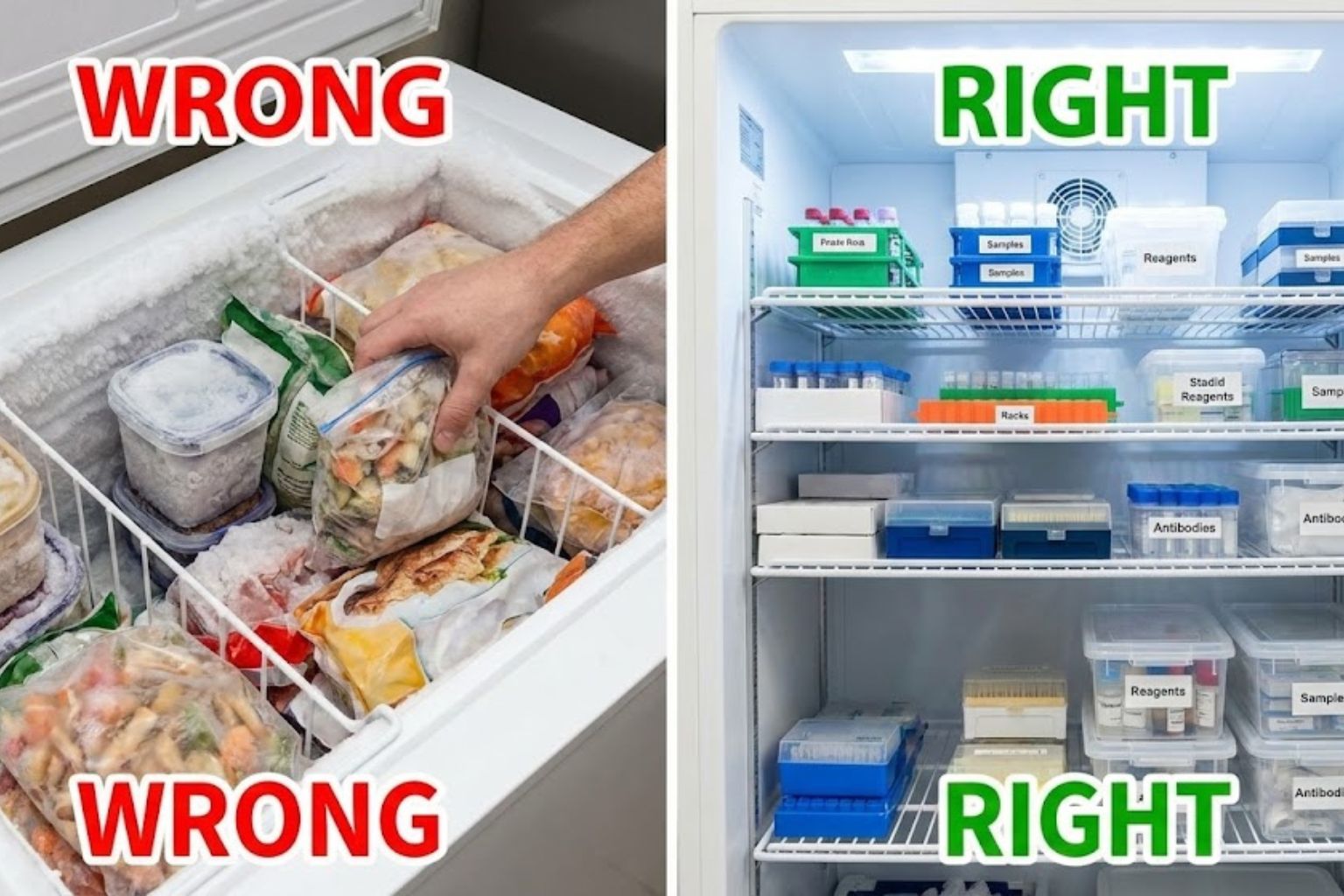
One of the most devastating and common Tirzepatide mistakes is the storage of long-term samples in a household-style “frost-free” freezer. This error is particularly common in smaller labs or during overflow storage situations where a breakroom freezer might be commandeered for reagents.
The Mechanism of Failure
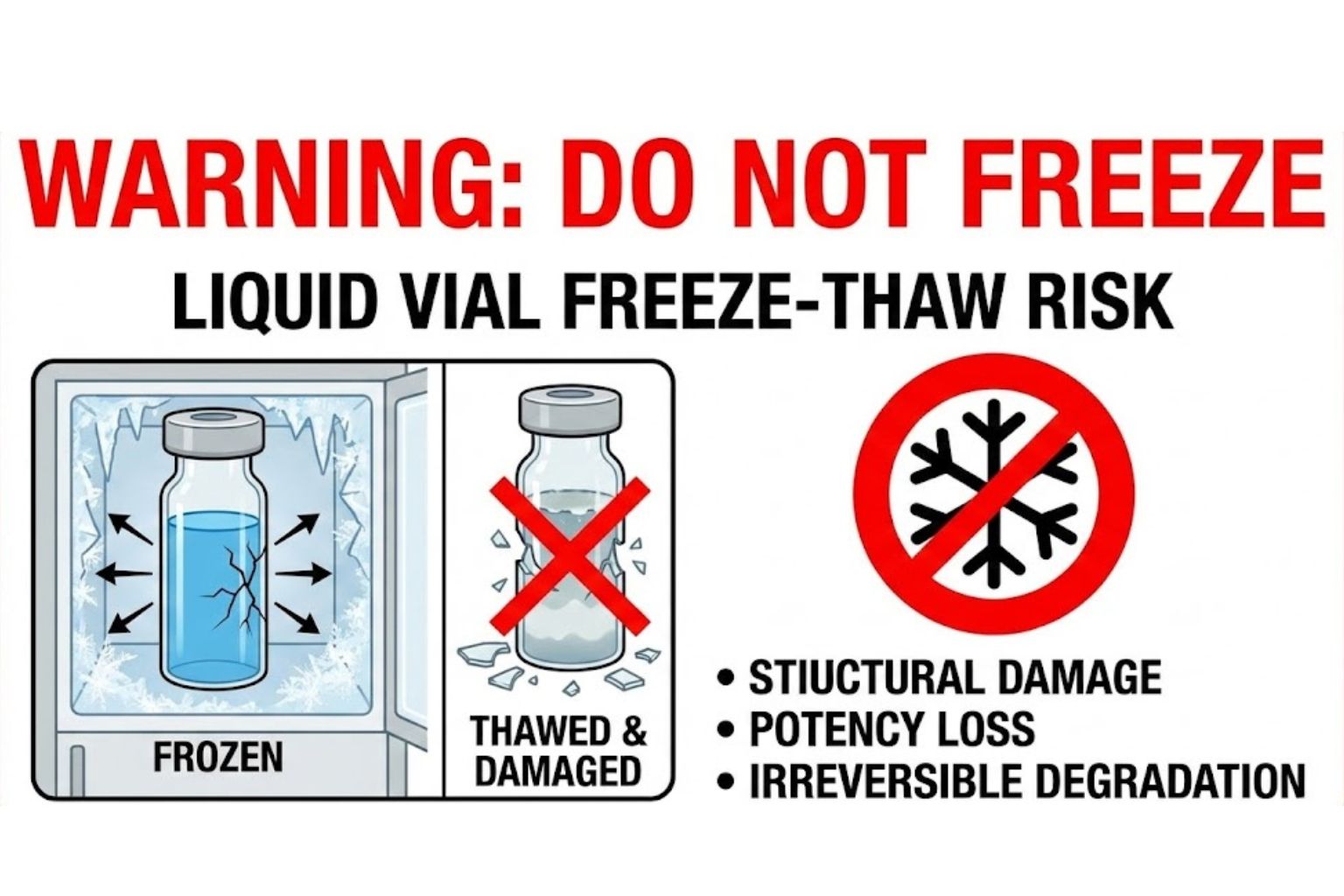
To understand why this is catastrophic, one must understand how a frost-free freezer works. In a manual defrost freezer (the kind with ice buildup on the walls), the temperature remains relatively constant. In a frost-free unit, the system is designed to prevent ice accumulation. It achieves this by periodically heating the evaporator coils—often several times a day—to melt any forming frost.
-
The Cycle: The temperature inside the freezer spikes from -20°C to near freezing (or even above 0°C in localized spots) and then blasts cold air to freeze back down.
-
The Impact: This creates a daily, invisible freeze-thaw cycle. For a peptide like Tirzepatide, this is torture.
-
Recrystallization: Every time the temperature fluctuates, the microscopic structure of the ice around the peptide changes. Small ice crystals melt and reform into larger, jagged crystals (a process known as Ostwald ripening). These larger crystals act like microscopic blades, physically shearing the peptide structure.
-
Phase Separation: Repeated cycling causes the salt and buffer components to separate from the water, creating pockets of hyper-concentrated solution that can chemically damage the peptide.
-
Correction: The Laboratory Standard
-
The Hardware: exclusively use laboratory-grade manual defrost freezers. These units maintain a steady-state temperature. Yes, they require the chore of manual defrosting once a year, but that chore is the price of sample integrity.
-
The Mitigation: If you absolutely must use a frost-free unit (e.g., in an emergency), place your peptide pen peptides inside a specialized thermal block or a thick styrofoam box full of packing peanuts deep inside the freezer. This insulation acts as a thermal buffer, smoothing out the temperature spikes of the defrost cycle so the pen peptide itself remains frozen.
3. Mistake #2: Aggressive Mixing (The “Protein Shake” Error)
There is a natural instinct when seeing a powder in liquid to shake it. We do it with paint, with juice, and with medication. In the world of peptides, this instinct must be suppressed.
The Physics of Shear Stress
Peptides are not protein shakes. Shaking a pen peptide vigorously to dissolve the powder is a rookie error that introduces shear stress.
-
-
Cavitation: Violent shaking creates cavitation bubbles—microscopic vacuums that form and collapse with immense energy. The shockwaves from these collapsing bubbles can snap the peptide backbone (hydrolysis) or disrupt its tertiary folding.
-
The Interface Problem: Perhaps more damaging is the creation of foam. Foam represents a massive increase in the air-water interface.
-
Peptides are often amphiphilic (having both water-loving and water-hating parts).
-
At the surface of a bubble, the hydrophobic parts of the peptide try to escape the water by sticking into the air, while the hydrophilic parts stay in the water.
-
This physical force pulls the molecule apart, causing it to unfold (denature). When the bubble pops, the peptide often misfolds and aggregates into useless clumps.
-
-
Correction: The “Swirl and Roll” Technique
-
Technique: After injecting the bacteriostatic water, hold the pen peptide by the crimp cap. Gently swirl it in a wide circular motion, keeping the liquid moving smoothly against the glass walls. Alternatively, place the pen peptide between your palms and roll it back and forth like a rolling pin.
-
Patience: Tirzepatide is a large molecule. It may not dissolve instantly. It might look cloudy for a minute. Wait. Let diffusion do the work. Walking away for 5 minutes is better than shaking for 5 seconds.
-
Visual Check: A properly dissolved solution is clear. If you shook it and it’s now cloudy or foamy, you have likely compromised the sample.
4. Mistake #3: Poor Labeling (The “Mystery Vial”)
In the heat of a busy experiment, it is easy to scrawl “Tirz” on a pen peptide and stick it in the fridge, intending to use it “tomorrow.” But tomorrow turns into next week, and next week turns into next month.
The Liability of Unlabeled Reagents
A pen peptide labeled “Tirz” with no date is a liability. It is a “mystery reagent.“
-
The “Bus Factor”: If the researcher who mixed it gets sick or leaves the lab, no one else knows what is in that pen peptide. Is it 5mg/mL or 10mg/mL? Was it mixed yesterday or two months ago?
-
The Drift: Using a pen peptide that is 45 days old because you thought it was 14 days old introduces data drift. The degradation products in the old pen peptide may not be inert; they might be immunogenic or inhibitory, actively skewing your results.
Correction: The 4-Point Data Label
Every single reconstituted pen peptide must carry a label with four specific data points. Use a fine-point permanent marker or a printed sticker:
-
Peptide Name: (e.g., “Tirzepatide”)
-
Concentration: (e.g., “5mg/0.5mL”) – Be explicit. Don’t just write “5mg” because that refers to the total mass, not the density.
-
Reconstitution Date: (e.g., “Rec: 12-Oct-25″) – This is your expiry clock.
-
Operator Initials: (e.g., “J.D.“) – Who is responsible for this mix?
Pro-Tip: Many labs use color-coded stickers (e.g., Red = Expired, Green = Active) or write the expiration date rather than the creation date to remove the mental math.
5. Mistake #4: Over-Penetrating the Stopper (Coring)
The rubber stopper on a pen peptide is a self-sealing membrane, but it is not indestructible. Repeatedly puncturing the same spot is a common mechanical error.
The Mechanics of “Coring”
“Coring” occurs when the hollow needle acts like a cookie cutter. Instead of sliding between the rubber fibers, the sharp bevel of the needle slices a tiny cylinder of rubber out of the stopper.
-
-
The Consequence: This microscopic rubber plug is pushed into the pen peptide. You now have “particulate contamination.“
-
These rubber bits can react with the peptide.
-
If drawn up into a syringe, they can block the needle.
-
Most importantly, the stopper is now physically compromised. It has a hole in it. The sterile seal is broken, allowing bacteria and air to enter freely.
-
-
Correction: Aseptic Strategy
-
Technique: Insert the needle at a 45-degree angle initially, then tilt it to 90 degrees as it penetrates. This technique, known as the “non-coring technique,” helps the needle slice a slit rather than punch a hole.
-
Location: Visualize the stopper as a clock face. If you poked it at 12 o’clock yesterday, poke it at 3 o’clock today. Never reuse the same puncture site.
-
The Ultimate Fix (Aliquot): The best way to avoid coring is to stop piercing the pen peptide entirely. Immediately after reconstitution, draw up the entire volume and divide it into single-use aliquots (e.g., insulin syringes or micro-tubes). This way, the main pen peptide is pierced only once, and the problem of coring is eliminated.
6. Establishing a Storage SOP: Systematizing Success
Willpower is a finite resource; checklists are not. To prevent Tirzepatide mistakes, you must remove the burden of decision-making from the researcher. Your lab needs a Standard Operating Procedure (SOP) for peptide handling.
Phase 1: Receipt
-
Action: When the package arrives, stop what you are doing. Do not leave it in the mailroom.
-
Check: Open the box. Are the ice packs still frozen? If they are warm and mushy, reject the shipment.
-
Log: Record the batch number and arrival date in the inventory log.
Phase 2: Storage (Lyophilised)
-
Action: Immediately place the boxes in the designated -20°C manual defrost freezer.
-
Organization: Store them in a secondary container (like a plastic bin) to protect them from light and physical knocking.
Phase 3: Usage (Reconstitution)
-
Thaw: Remove the pen peptide and let it sit at room temperature for 15 minutes. (Prevent condensation shock).
-
Clean: Wipe the stopper with alcohol.
-
Mix: Add bacteriostatic water gently. Swirl, do not shake.
-
Label: Apply the 4-point label immediately.
Phase 4: Disposal
-
The Hard Rule: “If it is Day 31, it goes in the bin.“
-
Protocol: Do not try to “save” the last 0.5mg for a rainy day. Old peptide is bad data. Discard it.
Following this strict workflow eliminates decision fatigue. You don’t have to wonder, “Is this still good?” The SOP makes the decision for you.
7. Inventory Management: The FIFO Principle
A surprising number of errors occur before the pen peptide is even opened. Poor inventory management leads to the usage of old, degraded stock simply because it was grabbed first.
The Hoarding Instinct
Labs often buy in bulk to save money. However, hoarding leads to “inventory burial.” New boxes get stacked in front of old boxes.
-
The Scenario: You buy Batch A in January. You buy Batch B in March and put it in front. You use Batch B. In December, you finally find Batch A at the back of the freezer. It has been sitting there for a year, potentially undergoing slow degradation or sublimation. You use it, and your data shifts.
Correction: First-In-First-Out (FIFO)
-
System: Implement a strict FIFO system. When new stock arrives, place it behind the old stock.
-
Marking: Write the “Date Received” large on the front of every box.
-
Reasonable Ordering: Don’t order more than you can use in 6 months. Freshness is a quality attribute. The money saved on bulk pricing is lost the moment you have to repeat an experiment because the reagents were too old.
8. The Variable You Control
Science is difficult enough. You are fighting against biological variability, equipment noise, and statistical probability. You do not need to add “user error” to that list.
Equipment failure is rare. Handling errors are common. By identifying these common Tirzepatide mistakes—avoiding the frost-free freezer, resisting the urge to shake the pen peptide, labeling religiously, and respecting the rubber stopper—you maintain the integrity of your tools.
An SOP is not just paperwork; it is a shield. It shields your data from the chaos of the environment. By implementing these robust laboratory protocols, you ensure that the only variables in your experiment are the ones you intended to test. When you look at your results, you want to be analyzing the biology of the subject, not the degradation of your peptide.